
Ophthalmology Fellowship


  • Two year full time fellowship program

  • La Familia Eye Center
    Hospital de la Familia
    Nuevo Progreso, S.M., Guatemala

COMPREHENSIVE OPHTHALMOLOGY

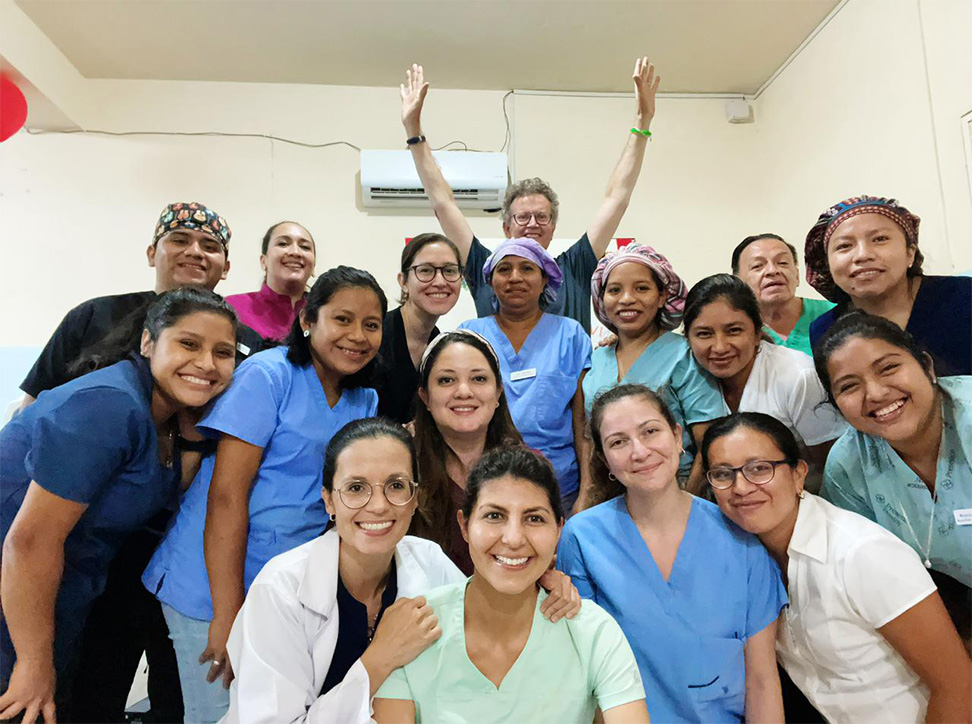
The Centro Oftalmológico La Familia in Western Guatemala provides clinical and surgical eye care for the region of Western Guatemalan and Southern Chiapas, Mexico. COLF receives educational and financial support from donors within and outside of Guatemala, as well as many ophthalmic corporations and humanitarian agencies. Employment of early and late-career ophthalmologists at COLF both serves the regional population and provides extraordinary experience and training. An International Fellowship at COLF provides an unique and prized bedrock for anyone selected to participate.

This 24-month fellowship is based at COLF and has an international component including a 4-6 week supervised US visit. While at COLF, fellows are supervised by Drs. Claudia Terraza (Cornea, Ant Seg), Melanie Gil (Glaucoma, Ant Seg) and María Isabel Matheu (Retina, Ant Seg) and Sofia Bravo Beltranena (Cornea, Ant Seg) Additional supervision will be provided by international ophthalmologists who serve on the COLF international Faculty and visit on-site for 8-10 weeks of the year. This faculty includes Glaucoma-Drs. George Tanaka , Geoff Emerick, and Jorge Hernandez, Malik Kahook and Rodolfo Perez. Cornea/Ant. Seg.- Drs. Seema Capoor, Eric Poulsen, Andy Sorenson, Bob Sorenson, and Mustafa Safi.

Goals of Fellowship

The COLF-CU International Fellowship prepares ophthalmologists from Guatemala and neighboring countries to diagnose, manage and treat highly complex glaucoma, cataract, corneal and anterior segment and medical retina diseases common to Western Guatemala. A cognitive and technical skill level expertise will be attained during the Fellowship.

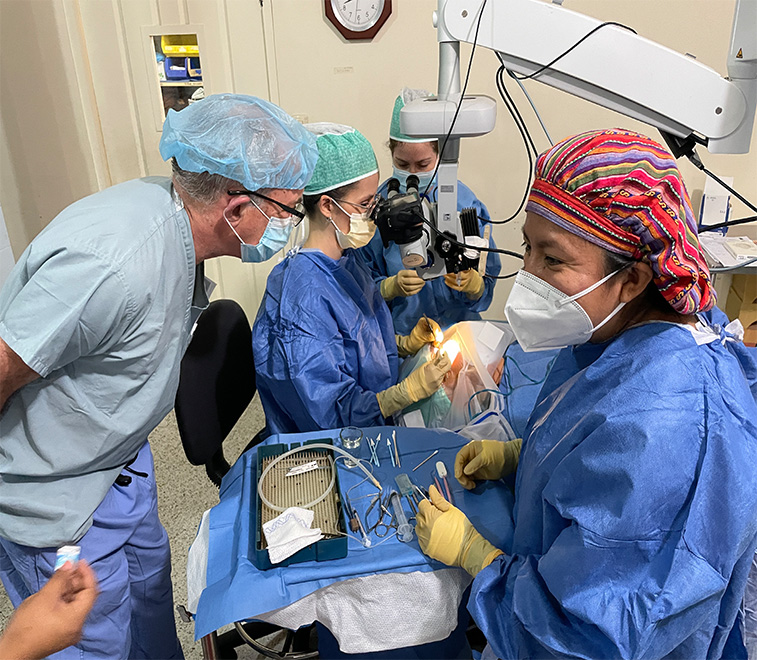
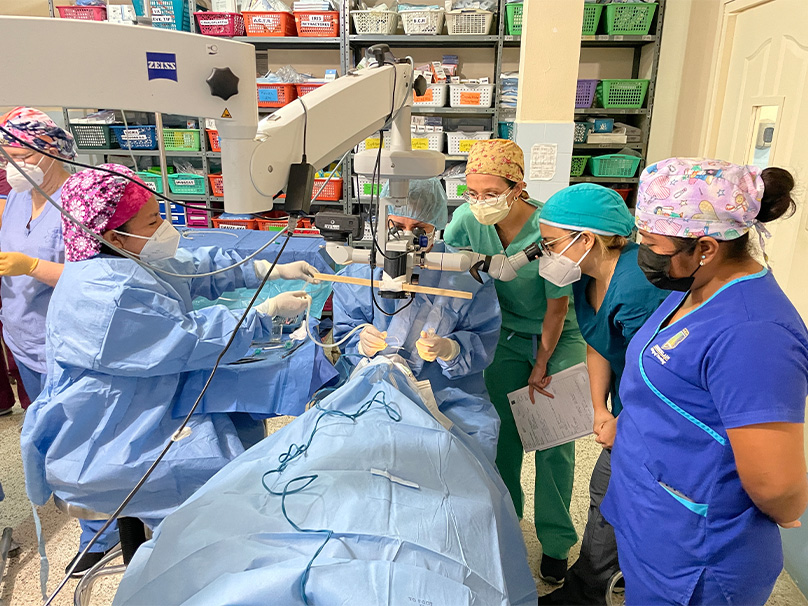
Clinical and surgical experience

Fellows will engage in high level collaborative and independent decision making and surgical performance. Due to the advanced nature of the regional pathology, Fellows will conclude their training with one of the highest case logs available in the region.
  • Humphrey Visual Fields
  • Spectral-Domain OCT
  • Macular OCT
  • B-scan ultrasonography
  • A Scan and IOL calculation decision making and formulas
  • Interpretation of retinal imaging
  • Refracting and interpreting refractive errors
  • Topography
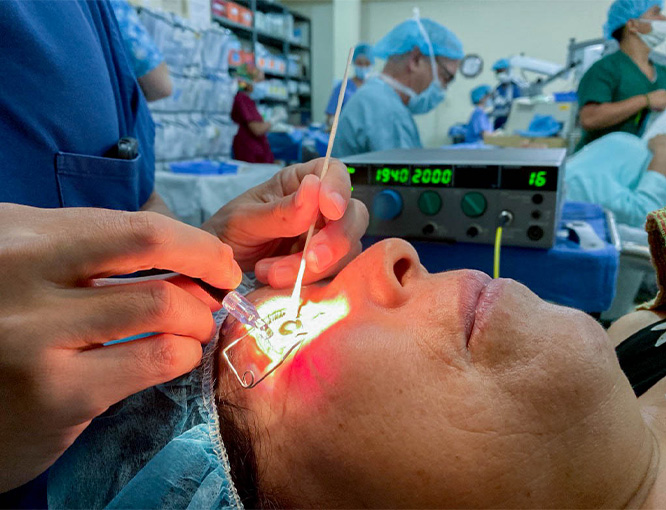
  • Laser Peripheral Iridotomy (LPI)
  • Laser Trabeculoplasty (SLT)
  • Pan retinal photocoagulation
  • Capsulotomy
  • Suture adjustment of corneal astigmatism following PK
  • Trabeculectomy
  • Glaucoma drainage devices (Ahmed, Baerveldt, Clearpath)
  • Endoscopic cyclophotocoagulation (ECP)
  • Trans-scleral Cyclophotocoagulation (mpCPC and CPC)
  • iStent trabecular bypass device
  • Kahook Dual Blade
  • XEN gel stent
  • Hydrus microstent
  • Clear corneal phacoemulsification (including complex, traumatic, pediatric and
    pseudoexfoliation cataracts)
  • SICS
  • ICCS
  • Anterior vitrectomy
  • Pars plana vitrectomy
  • Corneal transplant
  • DSEK (not DMEK)
  • Tectonic keratoplasty
  • Gunderson flap
  • Tarsorrhaphy
  • IOL exchange
  • Iris claw lens placement
  • Sutured PCIOL techniques

Educational Goals

Cornea

  • Corneal infections and inflammations (keratitis, keratoconjunctivitis)
  • Corneal dystrophies and degenerations (Fuchs’ dystrophy, lattice
    dystrophy)
  • Corneal trauma and wound healing; complex post-IOL situations
  • Corneal topography and imaging
  • Corneal transplantation techniques (penetrating keratoplasty, endothelial
    keratoplasty)
  • Anterior segment reconstruction
  • Corneal cross-linking for keratoconus; though not offered locally
  • Management of corneal ectasias
  • Corneal pathology and histopathology

Glaucoma

  • Glaucoma diagnosis and classification
  • Intraocular pressure measurement techniques
  • Visual field testing and interpretation
  • Optic nerve head evaluation and imaging
  • Medical management of glaucoma (eye drops, oral medications)
  • Laser therapy for glaucoma (SLT, cyclophotocoagulation)
  • Surgical management of glaucoma (trabeculectomy, tube shunt
    procedures)
  • Minimally invasive glaucoma surgery (MIGS)
  • Glaucoma drainage devices and implants
  • Glaucoma in special populations (pediatric glaucoma; traumatic;
    pseudoexfoliative)

Anterior Segment

  • Evaluation and management of corneal and anterior segment trauma
  • Anterior segment imaging (optical coherence tomography, anterior
    segment OCT)
  • Diagnosis and management of uveitis and ocular inflammation
  • Ocular surface disorders (dry eye, blepharitis)
  • Conjunctival and scleral diseases
  • Iris and angle abnormalities
  • Cataract surgery techniques and complications
  • Intraocular lens (IOL) selection and calculation
  • Complications of anterior segment surgery
  • Emerging technologies and innovations in anterior segment surgery

Educational Experiences

  • Grand Rounds: Present surgical and clinical cases during “Weekly Grand Rounds from Guatemala” held each Wednesday 18:00 PST.

  • BCSC: Complete a reading of the BCSC during the two years.
  • Meetings: Attend one international meeting yearly (ASCRS, AAO, ASRS, AGA). Partial funding provided.

  • Journal Clubs: Participate in 4 Journal Clubs during the year, sponsored by the U.S. faculty; articles from the ABO Quarterly Questions Articles series.
  • Track CME- type hours, accumulating 40 hours per year.
  • Participate in minimum 25 conferences each year selected from

    • bi-weekly CyberSight Webinars and receive Certificate of attendance through CyberSight. Similar remote learning experiences are offered
      through Wills Eye Hospital, the Barkan Society, the ASCRS or similar educators.
  • Take the OKAP after the first and second year with review of strengths and weaknesses with Chairman and Directors of COLF.

  • OSCAR: Submit a video of core cases (phaco, SICS, pterygium, Ahmed, PKP) during the first three months for OSCAR scoring with COLF supervisors. Failure of a Fellow to achieve basic surgical competency can influence ability to progress in the Fellowship and result in termination. The faculty are committed to surgical excellence and will work with fellows to ensure growth.

  • Written review: After the first month, and then quarterly, Fellows will receive a written review of their progress prepared by the HDLF Manager, and two of the COLF Directors and the COLF Chairperson. These reviews form a part of your academic record.

Research Responsibilities

Fellows are expected to complete one or more research projects during their training. The fellow is encouraged to present their research at academic meetings such as the American Academy of Ophthalmology (AAO), Association for Research in Vision and Ophthalmology (ARVO), and American Glaucoma Society (AGS), American Society of Cataract and Refractive Surgery (ASCRS) as well as other subspecialty meetings in Central America. Presentation at the University of Colorado Annual Resident, Fellow, and Alumni Research Day in July is a possibility. It is anticipated that the fellow will publish
one or more papers during his/her fellowship.

Duration of Fellowship

2-year full-time commitment to Centro Oftalmológico La Familia
  • Staggered start dates based on availability

  • Months 1-4 spent at COLF

  • Month 5 spent at Colorado University or San Francisco Bay area

  • Months 6-24 spent at COLF

Benefits

room and board

Room and Board will be provided

travel award

Annual award for attendance at meetings including air, lodging, food, registration

salary

Competitive salary will be provided

certificate

Certificate of completion of Fellowship upon completion

certificate

Certificate of appreciation from LFEC, HDLF and HDLFF after second year

salary bonus

At the completion of
the second year.

other

Personal copy of the Basic Clinical Science Course, AAO

Prior to submitting application

Complete all Cybersight modules prior to hire (glaucoma, SICS, Faco, etc)

Submit Curriculum Vitae demonstrating broad experience and sufficient training

Submit 3 letters of recommendation

Spend 5 days at COLF observing prior to consideration of application

Willingness to stay in and enjoy Nuevo Progreso

Conversant in English

Adequate surgical volume prior to Fellowship (60-100 cases including phaco, ECCE, SICS) with certification from supervisors of basic surgical competency. The fellowship period is intense and demands individual commitment to skill development.

If, after reviewing these websites and requirements, you feel you qualify for our fellowship, please submit an application
to the Fellowship Coordinator at lafamiliaeyecenter@hdlff.org.
We ask that you also submit the following supplemental materials via email by October 1 of each year.

Fellowship decision for each year made by October 15 of each year for the upcoming January Fellowship start.

Program Directors

Claudia Terraza, MD, Co-Director, Centro Oftalmológico La Familia

Melanie Gil, MD, Co-Director, Centro Oftalmológico La Familia
Andrew Sorenson, MD, Co-Chair, Centro Oftalmológico La Familia Department

Jorge Hernandez, MD, Co-Chair, Centro Oftalmológico La Familia Department